Sign in
Home
How Much Hands-On Time Does Automated LNP Formulation Take?
By Joshua Gomes
Automated LNP formulation requires hands-on time for stock preparation, deck loading, and any transfers or restocking outside the automated method. Integrating input preparation, formulation, and post-processing on a liquid handler can remove repeated manual steps between samples and concentrate operator work around the run.
Separate hands-on time from elapsed workflow time
Hands-on time is the time a scientist actively spends preparing reagents, loading equipment, transferring samples, and cleaning or restocking. An automated method’s duration usually only includes the steps performed by the instrument, so a short formulation cycle alone tells you little about the scientist time required to complete a screen.
Compare workflows from the same starting materials to the same endpoint, such as collected formulations or plates ready for measurement. Three measures help describe what the scientist and equipment are doing:
- Hands-on time: Active operator work across the steps included in the comparison.
- Unattended time: Periods when the method proceeds without operator action.
- Elapsed workflow time: The total time from the defined starting point to the endpoint, including automated operation and waiting.
For guidance on comparing time, material use, and workflow requirements, see How to Evaluate an LNP Screening Platform.
Compare single-sample and automated benchtop workflows
Single-sample instruments, such as NanoAssemblr Ignite (Cytiva), automate mixing while an operator manually loads inputs, starts each formulation, and retrieves the sample. Across a larger screen, those actions recur for each preparation.
Automated benchtop systems, such as Sunscreen (Unchained Labs), can handle reagent delivery, sample collection, and cleaning across a batch. Their hands-on requirements therefore differ from those of a single-sample instrument. In standalone configurations, the work typically divides as follows:
| Workflow step | Single-sample instrument | Automated benchtop system |
|---|---|---|
| Loading inputs | Load inputs and collection labware for each preparation | Load inputs and collection labware for the whole batch |
| Between formulations | Perform the mixer replacement or cleaning steps required by the method | Instrument executes the programmed sequence, including cleaning where applicable |
| Collecting samples | Retrieve each formulated sample by hand | Instrument collects the entire sample batch into output labware |
| Preparing for downstream automation | Transfer collected samples to the liquid handler | Transfer the collected batch to the liquid handler unless that handoff is automated |
Reusable and single-use mixers create different handling requirements. Cleaning a reusable mixer may be automated, while single-use mixers may be loaded before a single run or an entire batch begins. Count the actions that require an operator to return to the system, including the handoff to downstream sample preparation.
Integrate input preparation into the liquid handler method
Starting-stock preparation can be followed by automated dilution, lipid blending, and source-plate preparation. Including those steps in the same automated LNP formulation workflow reduces manual pipetting before mixing begins.
With the LNP Screening Array, the operator loads the starting reagents, tips, arrays, and required sample labware according to the deck plan. The configured method can then prepare the formulation inputs and execute the mixing sequence.
| Preparation step | How the work is handled |
|---|---|
| Prepare starting stocks | Scientist prepares the lipid, cargo, and other starting solutions required by the method |
| Load the deck and launch the method | Scientist loads reagents, tips, arrays, source plates, and required collection or processing labware, then starts the run |
| Dilute stocks and combining lipid components | Liquid handler performs the programmed dilutions and lipid blending |
| Fill source plates | Liquid handler distributes prepared inputs according to the formulation plan |
| Run formulation and collect samples | Liquid handler delivers inputs to the micromixers and recovers each formulation |
One setup covers the conditions loaded for that run. Larger screens can still require more stock preparation, labware, and loading time, even when the repeated liquid-handling and formulation steps are automated.
Continue from formulation into post-processing
Keeping formulated samples on the liquid-handler deck allows the method to prepare them for the next processing step. That can begin with dispensing samples into plates or tubes for batched buffer exchange. Loading that labware during deck setup lets the liquid handler transfer formulations directly from their collection reservoirs.
The configured method can also include dilution for dynamic light scattering (DLS) and preparation of a RiboGreen assay for RNA encapsulation efficiency. Include these preparation steps when comparing hands-on time, since they can require substantial pipetting after formulation.
| Next processing or analytical step | Preparation the liquid handler can perform | Subsequent processing or measurement |
|---|---|---|
| Particle size and polydispersity by DLS | Dilute samples and dispense them into compatible measurement labware | Measurement on a DLS instrument |
| RNA encapsulation efficiency by RiboGreen | Prepare sample dilutions and assay wells, including reagent addition | Measurement on a fluorescence plate reader |
On a setup with standalone analytical instruments, an operator moves the prepared labware to those instruments. Integrated plate handling may automate that handoff as well. Evaluate the steps available in the configured workflow, including where samples leave the deck and what preparation is complete when they do.
See what changes across a 96-formulation screen
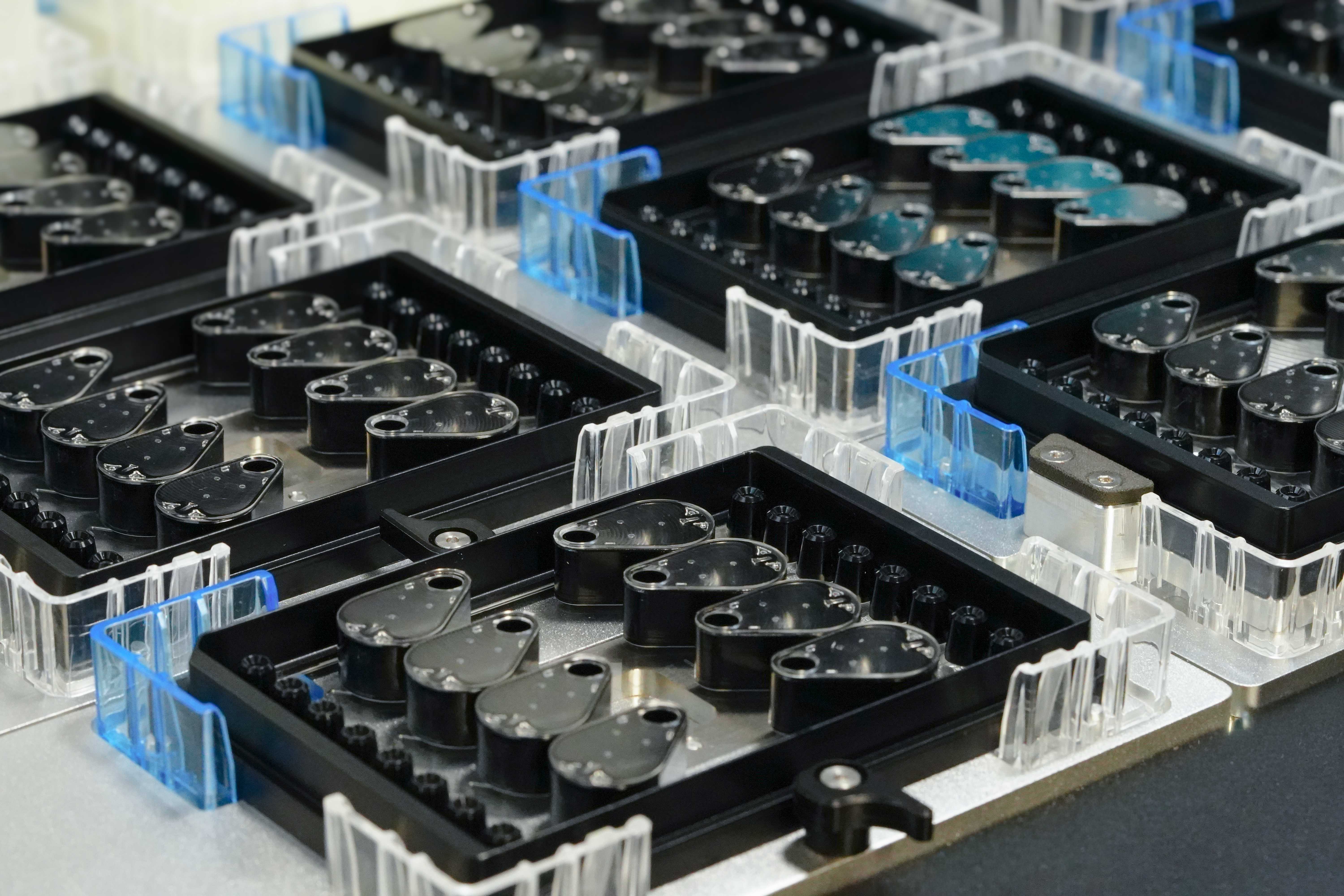
Running 96 independent formulations with the LNP Screening Array uses 12 arrays, with eight single-use micromixers per array. On a deck configured to accommodate those arrays and the required reagents, tips, and other supporting labware, the operator can load the screen and launch the method without manually loading each formulation in sequence.
The snapshot below compares that setup with a two-input, single-sample syringe workflow using fresh input syringes and collection vessels for each preparation.
| Task across 96 formulations | Single-sample syringe workflow | LNP Screening Array workflow |
|---|---|---|
| Preparing and loading inputs | Fill and load 96 lipid syringes and 96 aqueous syringes | Load starting reagents and source plates for automated preparation and delivery |
| Running formulations | Launch 96 individual cycles, with manual turnover (including mixer cleaning or consumable replacement) between preparations | Launch the configured method using 12 arrays |
| Collecting samples | Load and retrieve 96 collection vessels | Collect all 96 samples in one collection plate with the liquid handler |
| Continuing into post-processing | Manually transfer samples to the liquid handler for automated preparation | Continue into the post-processing steps included in the same method |
In a representative 96-formulation workflow, the array completes the formulation stage in approximately 30 minutes. That figure describes elapsed formulation time; stock preparation, deck setup, post-processing, and analytical measurements have their own durations.
For larger screens, plan restocking around tip, reagent, labware, and deck capacity. Replacing used arrays and preparing the next run remain hands-on tasks, while a fresh micromixer for each formulation removes the need to clean or manually exchange mixers between samples within the loaded run.
Measure hands-on time in your evaluation
Evaluate hands-on time with the LNP Screening Array using your own lipids, cargo, and liquid handler. Get applications support to compare preparation, setup, operator interventions, and sample handling with your current method, and confirm which portions of the screen can run unattended.