Sign in
Home
LNP Screening Array vs. Benchtop Systems
By Joshua Gomes
High-throughput LNP screening doesn't require a benchtop system. The LNP Screening Array brings microfluidic formulation directly on the liquid handler in your lab, removing the separate formulation step that turns benchtop systems into a bottleneck.
What does high-throughput LNP screening require?
When teams move from evaluating individual LNP formulations to screening larger formulation sets, the limiting factor shifts from generating a single formulation to generating many formulations efficiently.
A high-through screening workflow requires:
| Requirement | Why it matters |
|---|---|
| Automation across the workflow | Reduces manual handling between sample preparation, formulation, and downstream analysis |
| Short formulation cycles | Allows teams to evaluate more formulations within the available screening window |
| Repeatable formulation performance | Helps ensure differences between samples reflect the formulation variables being studied |
Many labs already use liquid handlers for reagent preparation, sample transfer, and downstream workflows. However, LNP formulation is often performed separately on a single-purpose benchtop system.
When formulation occurs outside the screening workflow, each sample must pass through another instrument, another set of handling steps, and another process before it can continue to analysis.
Where do benchtop LNP systems fall short for screening?
Most benchtop systems are designed to produce one formulation at a time. That approach works well for individual runs, but is a poor fit for a screen.
It's slow relative to the rest of the screen.
Each condition requires its own run, and the cycle time is fixed by the instrument.
It pulls samples off the deck.
Prepared lipid and aqueous reagents leave the liquid handler for the benchtop system, and each formulated sample comes back for downstream processing. That’s an added instrument, an added step, and a manual handoff on every condition.
It gets worse as the screen grows.
Because every formulation repeats the same off-deck cycle, the time and handling that formulation adds scale with the size of the screen. For example, a 96-formulation screen turns that single off-deck step into the bottleneck.
How does the LNP Screening Array remove the formulation bottleneck?
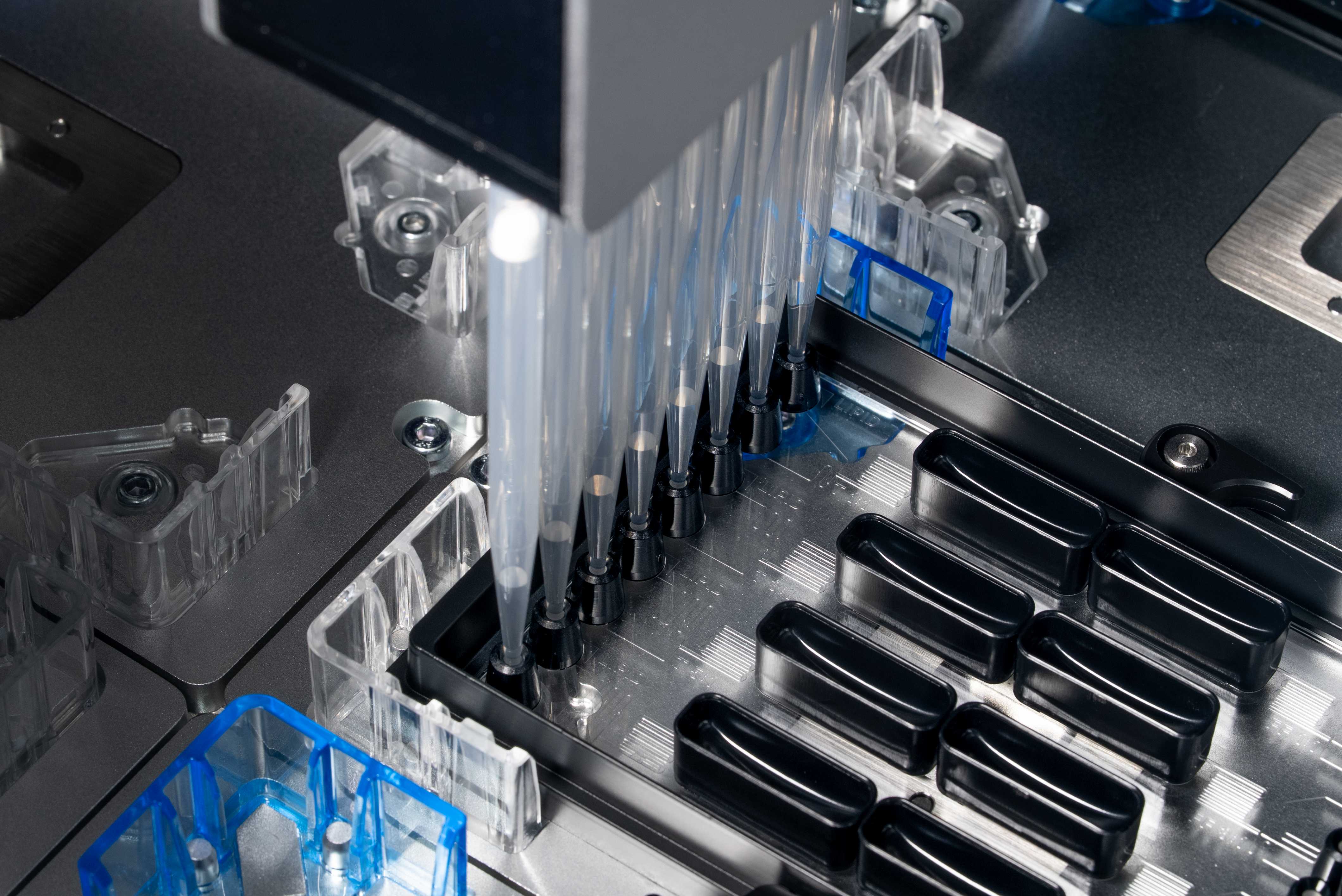
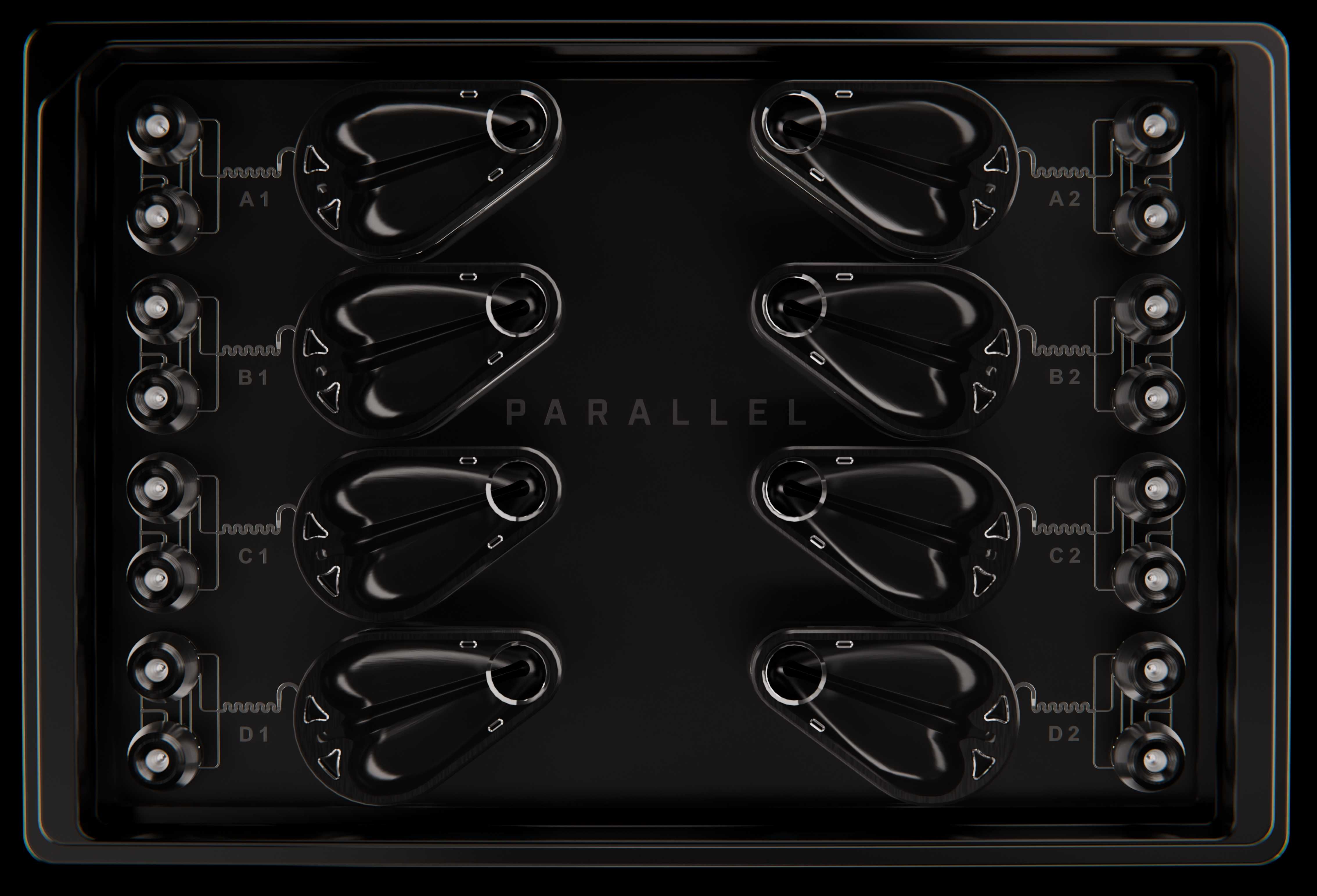
The LNP Screening Array brings microfluidic formulation on the liquid handler you already use for reagent prep and sample handling. It’s a microfluidic consumable in a standard SLAS microplate format, so formulation stops being a separate instrument and becomes a step in the automated workflow.
The liquid handler delivers the lipid and aqueous inputs and drives flow through the array. Each formulation collects on the deck in its own reservoir. There's no separate off-deck pressure instrumentation and no bespoke plumbing: input, mixing, and collection all happen in the liquid-handling environment you already run.
Each formulation is generated in seconds, not the minutes a benchtop cycle takes. At that speed, adding conditions no longer stretches the timeline, and formulation stays a minor step even across hundreds of conditions.
For a step-by-step look at the process, see How the LNP Screening Array Works.
What changes when you run a larger LNP screen?
The gap between the two approaches is clearest at scale. Here is a representative 96-formulation screen, run each way:
Benchtop system
96 conditions run as 96 repeated cycles. Inputs go off-deck for each one, samples route back for collection, and the formulation step alone can stretch across a full week.
LNP Screening Array
Formulation runs inside the liquid-handler workflow. Independent micromixers formulate in parallel, samples collect on deck, and the formulation portion of the same 96-formulation screen finishes in one hour.
| Screen | Benchtop system | LNP Screening Array |
|---|---|---|
| Formulation step | Separate off-deck instrument | Runs on the liquid handler |
| Cycle time per formulation | ~10 minutes | ~30 seconds |
| Sample handling | Routed off-deck and back | Collected on the deck |
| Total time for 96-formulation screen | ~1 week | ~1 hour |
These differences carry through to equipment, materials, labor, and cost. For that breakdown, see What Determines the Cost per LNP Formulation.
Which teams benefit most from on-deck LNP formulation?
The LNP Screening Array fits teams that already run liquid-handling automation and want to bring LNP formulation onto the same deck.
It is built for:
- Lipid library / chemistry screens
- Formulation composition screens
- Physicochemical screens
- In-vitro potency screens
- AI or ML guided screens
Rather than buying, installing, and validating another standalone instrument, these teams extend the liquid handler they already own to cover input delivery, formulation, and collection in one workflow; one process from sample prep through downstream analysis, with the off-deck handoffs removed.
What does it take to get started?
Evaluation runs on your existing liquid handler, with your reagents and your screening goals:
- Confirm compatibility with your liquid handler
- Receive the LNP Screening Array Starter Kit
- Load the platform-specific automation protocol
- Generate formulations under your screening workflow
- Review particle size, PDI, and workflow fit
Evaluate the LNP Screening Array
The Starter Kit includes the arrays, automation protocol, and in-person training to run the workflow on the automation platform you already have and evaluate success using your own formulations.
Contact us to discuss your workflow or request the LNP Screening Array Starter Kit to begin testing.