Sign in
Home
What Causes Variability in LNP Formulation?
By Joshua Gomes
Variability in LNP formulation can begin with the input materials, how lipid and aqueous phases are combined, and the handling steps that follow mixing. Even when the intended formulation remains identical, differences in these process variables can affect particle size, polydispersity index (PDI), and encapsulation.
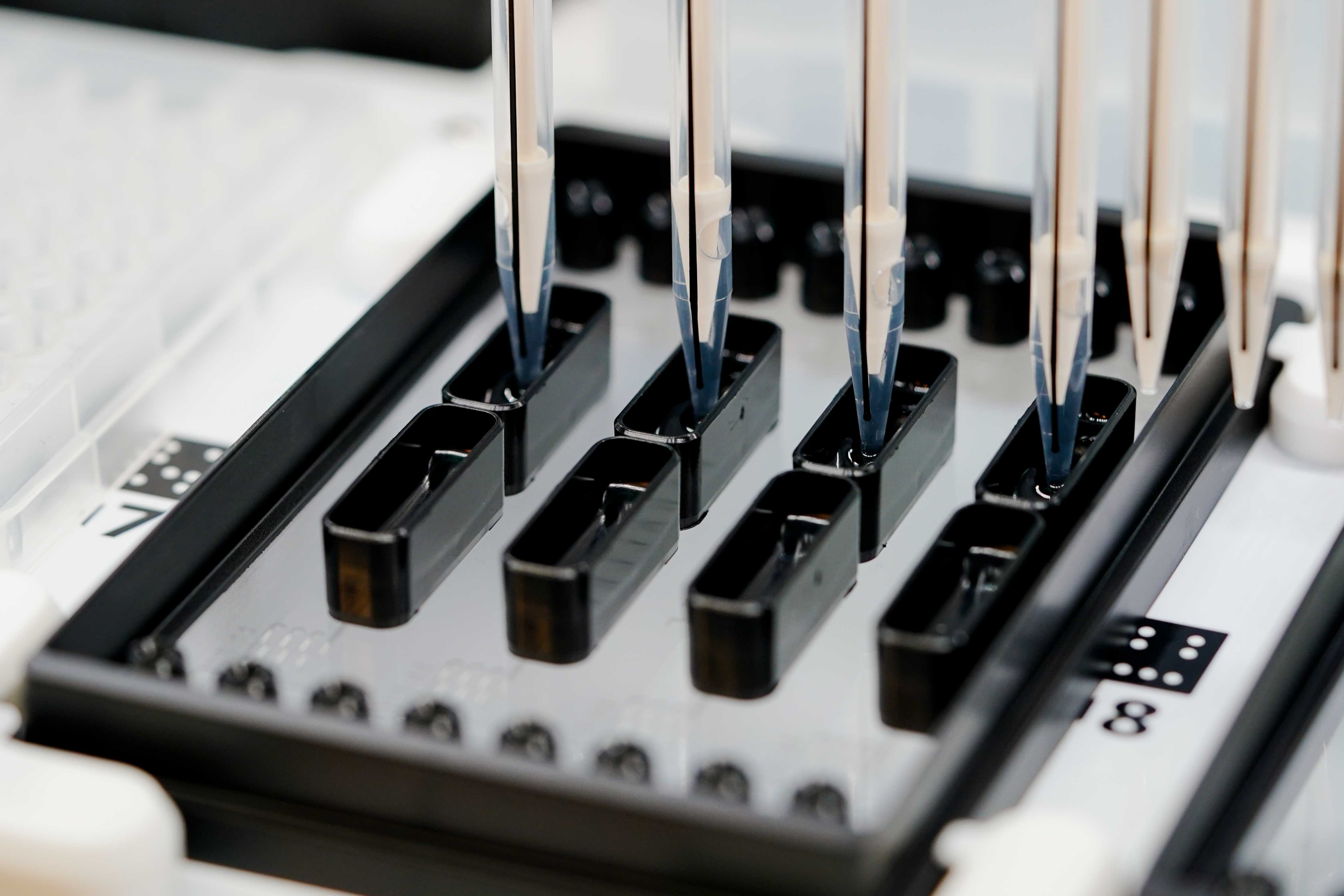
The same formulation produces different particles when the process changes
When the same formulation yields different particles from one run to the next, the cause usually lies in how each sample was made rather than in the recipe.
Teams start by reviewing the variables they set on purpose: lipid composition, N/P ratio, buffer, and cargo. These define the intended formulation. They do not capture the process variables that act during preparation, mixing, and handling.
One mechanism explains most of what follows: LNPs form by nanoprecipitation. When the ethanolic lipid stream meets the acidic aqueous stream, ethanol content drops, the lipids become supersaturated, and particles nucleate and grow until the available lipid is consumed.
If solvent exchange is slower or uneven, different regions of the mixture reach supersaturation at different times, changing how particles nucleate and grow. Anything that changes lipid solubility, the degree of supersaturation, or the speed of solvent exchange can therefore change the resulting particles.
Troubleshooting variability means examining the workflow across three stages.
| Stage | What to examine |
|---|---|
| Before mixing | Input material preparation, concentration, buffer composition, temperature, and handling |
| During mixing | Mixing method, flow rate ratio, total flow rate, and liquid delivery behavior |
| After mixing | Dilution, collection, storage, hold time, and time to analysis |
Input materials determine how consistently particles can form
The state of the inputs matters as much as the recipe. Concentration, integrity, temperature, preparation method, and storage history all influence what reaches the mixer and how the phases interact.
Two inputs act directly on the chemistry. The aqueous phase has to be acidic enough to protonate the ionizable lipid, so small shifts in pH or buffer strength can change lipid ionization, RNA-lipid interactions. And the resulting particle characteristics and encapsulation. Ethanol pulls in water over time, so an aging lipid stock changes how particles form while every instrument reads normal.
| Input | What can change | Impact |
|---|---|---|
| Cargo | Concentration, integrity, buffer, temperature, storage history, and salt carried over from the RNA stock | Changes the aqueous phase during particle formation, affecting encapsulation and particle characteristics |
| Lipids | Concentration, preparation method, temperature, storage history, ethanol water content, and precipitation state | Changes lipid availability and the supersaturation the lipids reach at the point of mixing |
| Buffer | Composition, pH, and ionic strength | Sets the protonated fraction of the ionizable lipid and weakens electrostatic attraction to the RNA |
Shared stocks deserve particular attention because one preparation feeds many formulations. If that stock changes, the effect propagates across multiple samples and appears as an effect of the formulation variable under study.
The mixing method changes the particles produced
LNPs begin forming as soon as the lipid and aqueous phases meet, which means the mixing method directly affects the particles produced.
Bethiana et al. compared eleven mixing techniques using compositionally identical mRNA formulations and found that changing the mixer alone altered particle size, encapsulation, and in vivo protein expression. Each method was also reproducible across independent replicates, showing that the mixer can systematically shift the outcome of the same formulation.
Flow conditions determine how consistently particles form
Using the same mixer does not guarantee the same particle formation. Flow rate ratio, total flow rate, temperature, and delivery profile each change how the lipid and aqueous phases interact inside the mixer, which can shift the resulting particles.
| Condition | What it sets |
|---|---|
| Flow rate ratio | The relative proportion of lipid and aqueous phases entering the mixer, which influences solvent exchange and lipid supersaturation during particle formation |
| Total flow rate | How quickly the phases move through the mixer and how long they interact during particle formation |
| Temperature at mixing | The viscosity, ethanol volatility, and lipid solubility of the formulation environment |
| Delivery profile | How consistently the target flow conditions are maintained over the course of each dispense or formulation step |
When delivery varies between samples, the effect of the formulation variable becomes hard to separate from the process that produced the particles.
Post-mixing handling can introduce variability after particle formation
Particles continue changing after they leave the mixer. Until they are diluted and neutralized, the formulation environment can cause particles to grow, fuse, or change in size.
These downstream steps, along with collection, storage, and handling, can introduce variability in particle recovery and measured characteristics that are unrelated to the formulation itself.
| Step | What to keep consistent |
|---|---|
| Dilution | Timing and volume |
| Neutralization | Endpoint pH and how fast it is reached |
| Ethanol removal | Method and completeness |
| Collection | Recovery method and timing |
| Containers | Material and fill volume |
| Storage | Buffer, temperature, and hold time |
Manual transfers and sequential workflows can widen these differences because samples may spend different amounts of time between formulation, dilution, and characterization. The first and last samples in a screen can experience different hold times, introducing variation that is unrelated to the formulation variable being tested.
That same level of control needs to extend through characterization. DLS measurements can be affected by dust, aggregates, and differences in sample or cuvette handling, which can shift the measured Z-average and PDI.
Container material can also affect apparent recovery, particularly at screening volumes where lipid adsorption to plastic can introduce losses that are unrelated to the formulation itself.
Keeping filtration, sample preparation, and measurement handling consistent helps prevent analytical variability from being mistaken for a formulation effect.
Controlling the formulation process makes screening results easier to interpret
Some variability reflects the formulation chemistry itself, while additional variability comes from how reagents are prepared, mixed, delivered, and handled. Reducing those process-driven differences makes it easier to see which changes are actually caused by the formulation being tested.
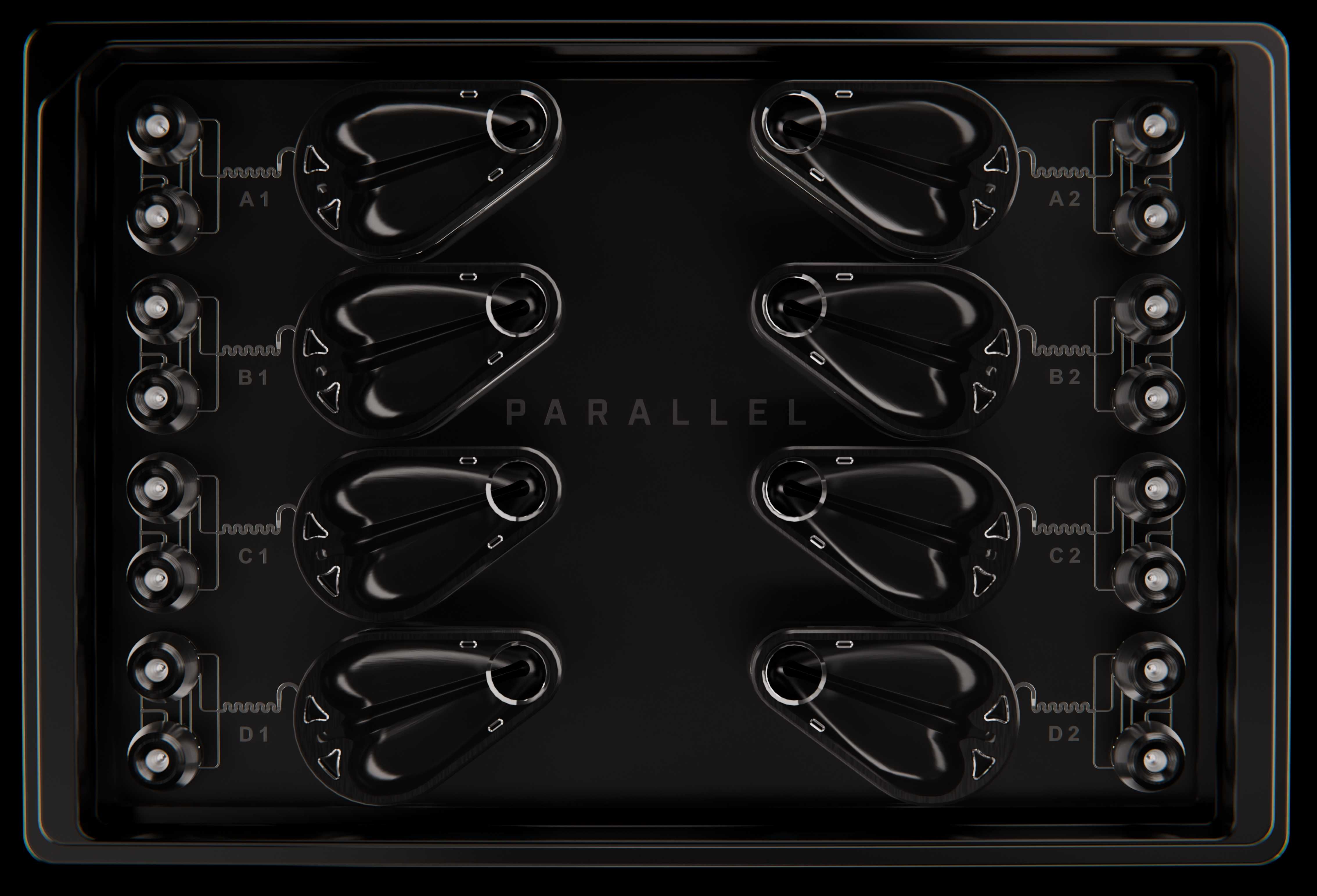
The LNP Screening Array standardizes the formulation step by bringing microfluidic mixing onto the liquid handler already running the screen. Reagent delivery, flow conditions, formulation, and sample collection are defined within the automated workflow, reducing the manual and sample-to-sample differences that can otherwise enter during formulation.
| Source of variability | How the LNP Screening Array addresses it |
|---|---|
| Mixing method | Every formulation runs through the same microfluidic mixer geometry |
| Liquid delivery | A platform-specific automation protocol defines the volumes and delivery parameters for the lipid and aqueous phases |
| Flow conditions | Flow rate ratio and total flow rate are fixed in the automation protocol, so the same values run on every sample in the screen |
| Liquid handling technique | Phase delivery, mixing, and collection execute as programmed steps, reducing user-to-user and sample-to-sample differences in technique and timing |
| Device consistency | LNP Screening Arrays are molded to the same channel geometry, so mixer geometry does not shift between devices or runs |
| Workflow handoffs | Formulation and collection stay on deck instead of moving to a separate benchtop system |
Input preparation stays with the team. Stock concentration, the water content of the lipid stock, and the pH of the aqueous phase are all set before anything reaches the deck, and they remain the sources of run-to-run difference that automating the mixing step does not address.
Bring microfluidic LNP formulation onto your liquid handler
The Starter Kit provides the tools to establish a repeatable automated formulation workflow, including arrays, a platform-specific automation protocol for your liquid handler, compatible workflow components, and support from the Parallel Fluidics applications team through your first results.