Sign in
Home
How to Run Microfluidic LNP Formulation Without a Microfluidics Engineer
By Joshua Gomes
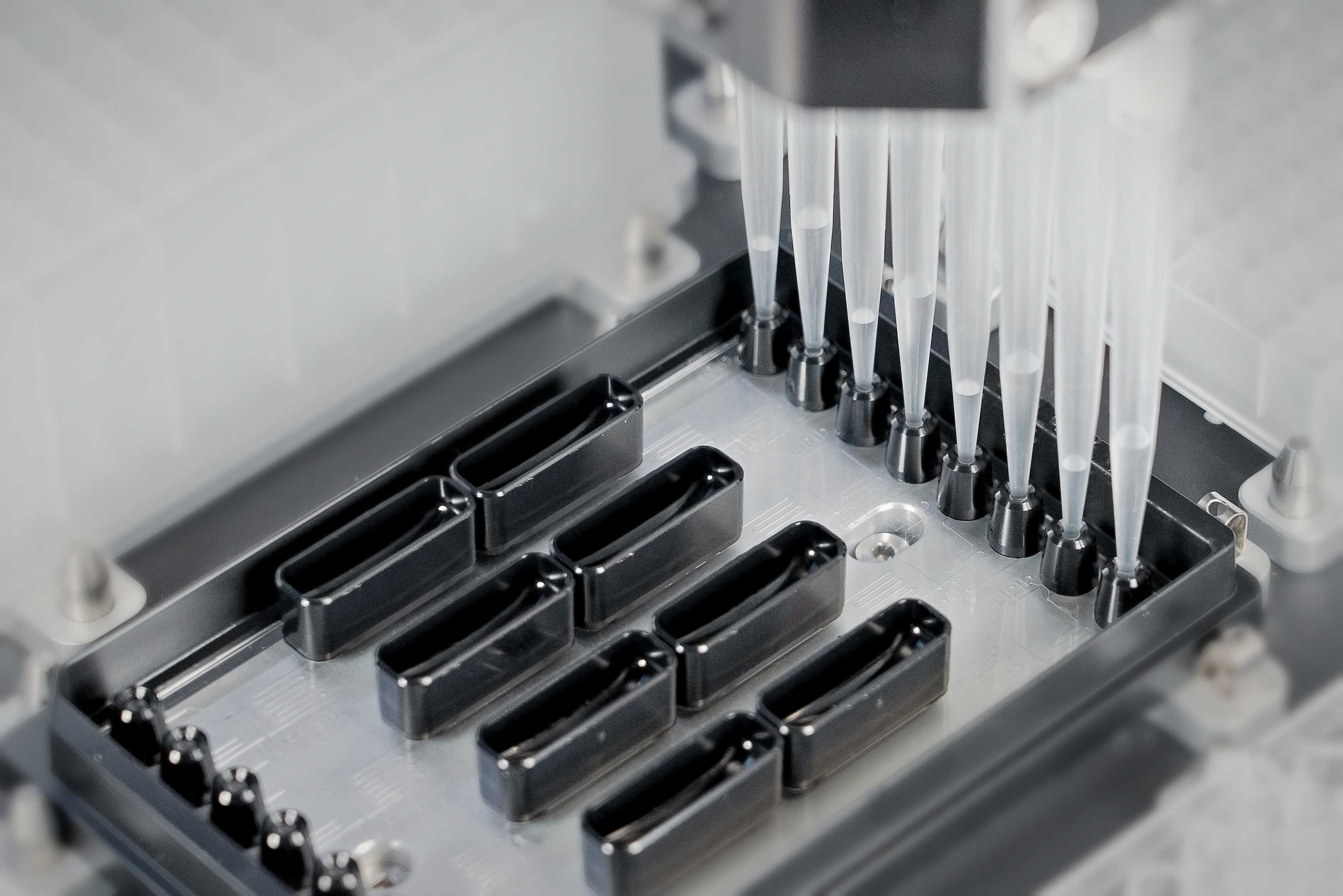
Run microfluidic LNP formulation without a microfluidics engineer by moving it onto your liquid handler, where your team loads plates, starts a method, and walks away while formulation runs.
Take the engineering out of microfluidic formulation
Microfluidic formulation has traditionally called for engineering skills at every stage, from sourcing the device to running it. Teams that need a custom device must design and fabricate it. Teams that buy off-the-shelf chips usually start from generic mixers, which take qualification and rounds of trial and error before they form consistent LNPs.
The work continues once the device is in hand. Someone has to connect pumps or pressure controllers, route and prime tubing, and calibrate the flow of each phase. Reusable chips then need flushing, cleaning, and troubleshooting between formulations.
| Task | Expertise it requires |
|---|---|
| Designing and fabricating a custom device | Microfluidic design and fabrication |
| Qualifying an off-the-shelf mixer for LNPs | Method development through trial and error |
| Connecting pumps or pressure controllers | Fluidic system assembly |
| Routing and priming tubing | Leak-free plumbing and bubble control |
| Calibrating flow | Setting and verifying flow rates for each phase |
| Cleaning reusable chips | Flush protocols and carryover checks |
| Troubleshooting clogs and bubbles | Diagnosing fluidic failures during a run |
None of these tasks is formulation science, yet any one of them can keep a capable formulation team from running microfluidics at all.
Replace fluidic setup with your liquid handler
Any scientist who can load plates and start a method on a liquid handler has every skill on-deck microfluidic formulation requires. Preparing source plates, placing labware, and launching methods from familiar software cover the entire workflow, because the device and the liquid handler take over the fluidic work.
| Engineering task | How on-deck formulation handles it |
|---|---|
| Sourcing and qualifying a mixer | A device built for LNP formulation sits on deck as standard labware |
| Connecting a flow source | Pipette tips engage the device directly |
| Loading inputs | The liquid handler dispenses from source plates |
| Setting flow | A configured method controls every dispense |
| Changing chips | The liquid handler moves to the next mixer |
| Collecting samples | Each formulation lands in its own on-deck reservoir |
Instead of building and maintaining a fluidic system, a scientist loads the source plates and launches a pre-built method.
Let the device and protocol handle the fluidics
On-deck formulation separates the engineering from the science. The device fixes the flow rate ratio and the mixing path, and the protocol sets total flow rate, dispense volumes, and timing. Your team stays focused on the decisions that shape the screen, from lipids and cargo to plate layout and assays.
| Set by | What it controls |
|---|---|
| The device | Flow rate ratio and mixing path, identical for every formulation |
| The protocol | Total flow rate, dispense volumes, and timing |
| Your team | Lipids, cargo, plate layout, and downstream assays |
Flow comes from the liquid handler's own pipette tips, so there is no separate flow hardware to install or calibrate. Does Microfluidic LNP Formulation Require a Pressure Controller? explains how the liquid handler drives flow.
Run formulation as a walk-away method
Once the source plates, labware, and method are in place, formulation and collection run from start to finish without anyone stepping in. Formulated samples stay on deck, so dilution and plate prep can follow in the same method.
| Step | Who handles it |
|---|---|
| Preparing source reagents | Your team |
| Placing labware and launching the method | Your team |
| Dispensing inputs and formulating | Liquid handler |
| Collecting and diluting samples | Liquid handler |
| Reviewing characterization data | Your team |
With the liquid handler carrying formulation from the first dispense to the final collection, the same team can take on more formulations without hiring a dedicated microfluidics engineer or automation specialist.
Run microfluidic formulation with the LNP Screening Array
The LNP Screening Array connects to your liquid handler through standard pipette tips, with no pumps to set up and no chips to clean. It is designed specifically for LNP formulation and arrives with a protocol configured and characterized for your liquid handler's pipetting technology, so no one on your team has to design a device, qualify a mixer, or develop a microfluidic method.
| Engineering task | With the LNP Screening Array |
|---|---|
| Device design and qualification | Not needed |
| Flow hardware setup | Not needed |
| Flow calibration | Not needed |
| Chip cleaning | Not needed |
| Method development | Protocol pre-configured for your pipetting technology |
Each formulation is generated in seconds and collected in its own reservoir on deck, ready for dilution in the same method.
Start your first run with our applications team
Our applications team installs the protocol on your liquid handler and helps you run the first formulations alongside your operators on site.
Operators learn to load the LNP Screening Array, launch the method, and recover samples during the first run on their own instrument.