Sign in
Home
How Early-Stage Biotechs Can Screen LNPs Without a Formulation Instrument
By Joshua Gomes
Early-stage biotechs can screen LNPs on the liquid handler they already use, with spending that follows the formulations they run instead of an upfront instrument purchase.
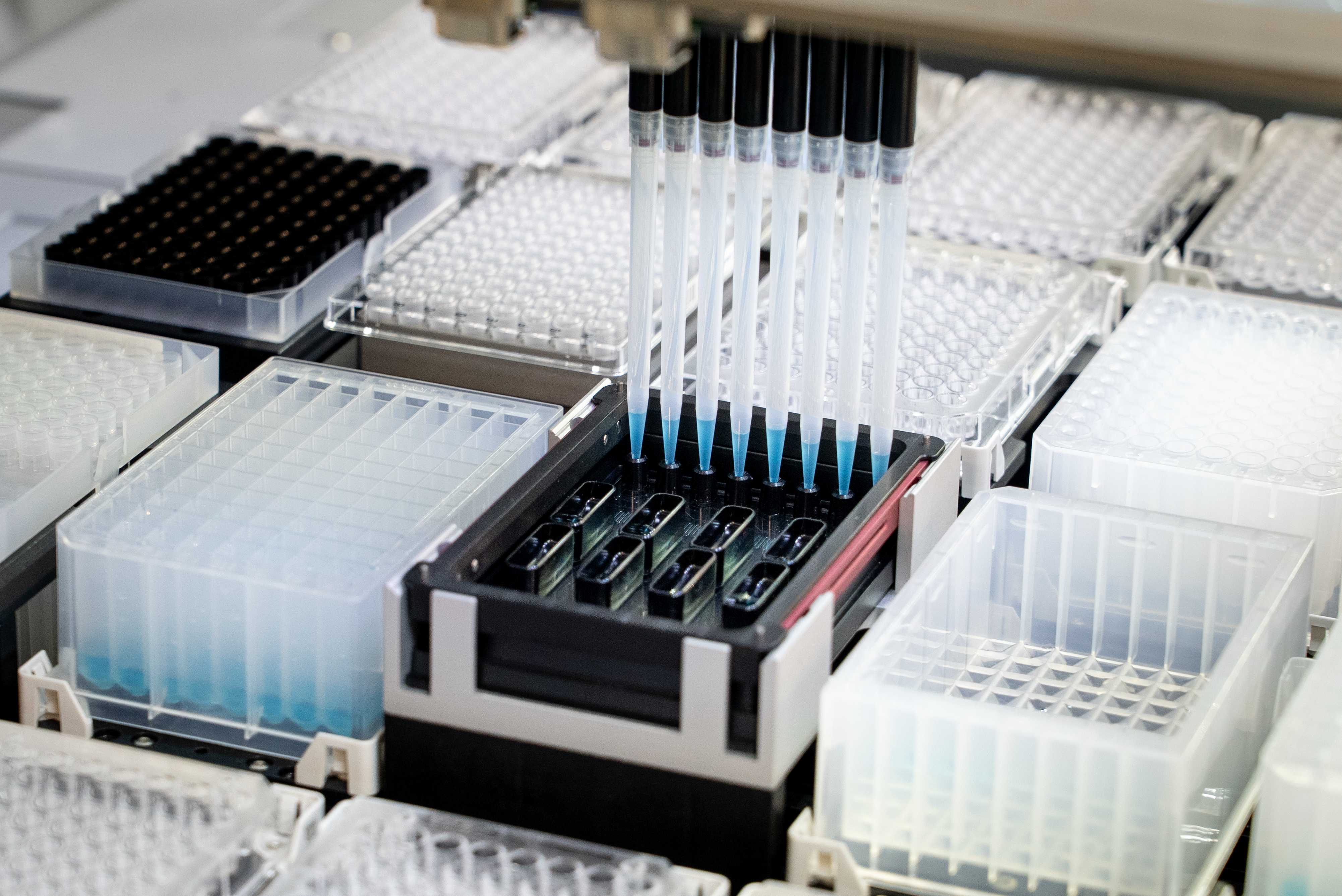
Build screening on your existing liquid handler
Most early-stage biotech teams already run a liquid handler for reagent prep, plate work, and assay setup. Adding lipid nanoparticle (LNP) formulation to that instrument lets a small team start screening without buying, installing, and servicing a dedicated formulation system.
| What a dedicated formulation instrument adds | What it means for a small team |
|---|---|
| Capital purchase | Budget committed before the first data point |
| Installation and qualification | Setup time before screening can start |
| Service contract | Recurring cost whether or not the instrument is in use |
| Bench space | Room taken from the lab's existing work |
| Training | Another system for a small team to learn |
Running formulation on the liquid handler your team already uses avoids these five variables.
Compare three paths to your first screening data
Early-stage teams usually reach first screening data in one of three ways, and each path trades upfront spend against screening speed, hands-on work, and control over materials and data.
| Comparison | Outsource to a CRO | Buy a benchtop instrument | Run on your existing liquid handler |
|---|---|---|---|
| Upfront spend | Study fees for every round | Instrument purchase and installation | No instrument purchase |
| Screening speed | Each round waits for a new study to be scoped, run, and reported | 10 to 64 formulations per hour, depending on the instrument | 100+ formulations per hour |
| Hands-on work | Scoping studies and reviewing reports | Loading and collecting samples by hand every run | Preparing source plates, with formulation and collection automated in your liquid handler method |
| Lipids and cargo | Shipped to the CRO | Stay in your lab | Stay in your lab |
| Formulation data | Delivered in reports after each study | Generated in house | Generated in house |
| Bench space | None | A dedicated spot on the bench for the instrument | One deck position on your liquid handler |
For a team that expects several rounds of screening, keeping formulation in house on existing automation shortens the loop between one result and the next design.
Make limited RNA and lipid go further
Early programs often work from small lots of custom RNA and newly synthesized lipids. Material lost to priming and dead volume, or spent on formulation volumes larger than downstream assays need, can’t go to another formulation or replicate. Smaller formulation volumes let a single RNA lot cover more formulations and replicates before the next synthesis.
| Where material goes | How it limits a small screen |
|---|---|
| Priming and dead volume | Separate controller, reservoirs, and tubing |
| Oversized formulation volume | Separate system |
| Failed or repeated runs | Refill reservoirs and collect each sample by hand |
| Replicates | Manual |
Matching formulation volume to what dynamic light scattering (DLS) and in vitro assays actually require keeps each RNA lot focused on the questions the screen has to answer. What Determines the Cost per LNP Formulation? puts numbers to material loss.
Scale screening spend with your program
Early-stage programs screen in bursts, with intense rounds of formulation followed by weeks of analysis, in vitro testing, or fundraising. A dedicated formulation instrument is paid for up front and sits idle between those rounds, while formulation on the liquid handler ties spending to the screening rounds themselves. Between rounds, the liquid handler goes back to reagent prep, plate work, and assays, so the lab's automation keeps working while a program waits on data or funding.
| Program stage | Capital instrument | Consumable on your liquid handler |
|---|---|---|
| First screen | Full purchase before any data | Spend matches the first screen |
| Between rounds | Formulation instrument sits idle with service still due | Liquid handler returns to reagent prep, plate work, and assays |
| Larger screens | Capacity limited by the instrument | More consumables added to open deck positions |
As a program moves from one screen to several, spending grows with the number of formulations, and no second instrument is needed to keep up.
Screen LNPs on your liquid handler with the LNP Screening Array
The LNP Screening Array brings microfluidic formulation onto your liquid handler. Each formulation is generated in seconds, with a new mixer for every formulation and less than 50 µL of dead volume, so more of each RNA lot reaches characterization.
| Early stage need | How the LNP Screening Array supports it |
|---|---|
| Low upfront commitment | Priced per formulation, with no instrument purchase |
| Limited material | Less than 50 µL of dead volume per formulation |
| Small team | Formulation and collection run inside your liquid handler method |
| Fast iteration | 100+ formulations per hour |
| Growing screens | More LNP Screening Arrays added to the deck as screens grow |
Go from first formulation to screening data
An evaluation in your lab confirms fit with your liquid handler and formulations. Our applications team is on site for the first run, and on-site DLS gives you characterization data on your own formulations during the visit.