Sign in
Home
What Equipment Does an LNP Screening Lab Need?
By Joshua Gomes
High-throughput LNP screening typically calls for a liquid handler, a dedicated formulation system, and characterization instruments. Running formulation on the liquid handler replaces the dedicated system and the capital purchase, bench space, and manual loading that come with it.
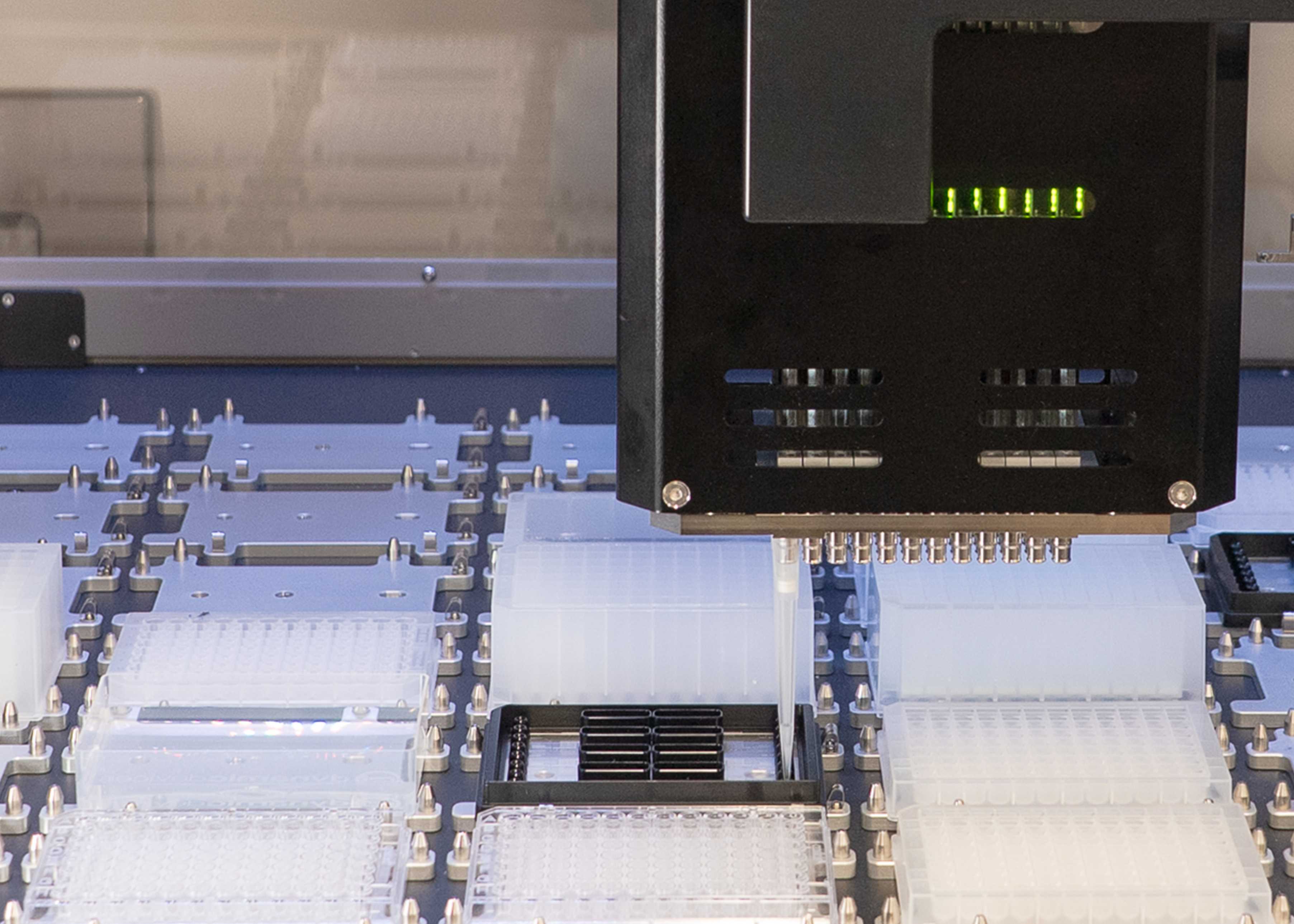
Equip your lab for LNP screening
A typical LNP screening lab relies on three main groups of equipment, plus standard equipment for preparing stocks. A liquid handler prepares inputs and moves samples, a formulation system mixes the lipid and aqueous phases into particles, and characterization instruments measure what each formulation produces.
| Equipment | What it does | Typical examples |
|---|---|---|
| Liquid handler | Prepares lipid and cargo inputs and moves samples between steps | Hamilton, Tecan, Formulatrix, Opentrons, and Dynamic Devices platforms |
| Formulation system | Mixes the lipid and aqueous phases into LNPs | Benchtop microfluidic instruments, pump- or pressure-driven microfluidic setups, or automated pipette mixing on a liquid handler |
| Characterization instruments | Measure particle size, PDI, and encapsulation efficiency | A DLS instrument and a fluorescence plate reader |
| Supporting equipment | Prepares and stores lipid and cargo stocks | Analytical balance, pipettes, and cold storage |
Most screening labs already own the liquid handler, the characterization instruments, and the supporting equipment. The formulation system is usually the largest and most specialized addition to the list.
Compare what each formulation method adds to your lab
Formulation is the one step in a screen that has traditionally needed equipment of its own. Benchtop instruments and pump- or pressure-driven setups each add a full system around the mixer, while pipette mixing adds no equipment but gives up control of the particles. On-deck microfluidic formulation is a newer option that brings controlled mixing onto the liquid handler a lab already runs.
| Formulation approach | Equipment it adds | What it means for your screen |
|---|---|---|
| Benchtop microfluidic instrument | The instrument, chips or cartridges, separate software, and bench space | Manual loading and sample recovery for every run, plus ongoing service |
| Pump- or pressure-driven microfluidic setup | Syringe pumps or a pressure controller with a gas supply, tubing and fittings, chips, and cleaning supplies | Assembly, priming, flow calibration, and cleaning between formulations |
| Pipette mixing on a liquid handler | No added equipment | Larger, less uniform particles and extensive method tuning |
| On-deck microfluidic formulation with the LNP Screening Array | A microfluidic consumable | Controlled particles, with formulation and collection automated in your liquid handler method |
On-deck formulation is the only approach in the table that controls the particles without adding a separate system to install, maintain, and load by hand.
Formulate on the liquid handler you already own
On-deck microfluidic formulation moves the formulation step onto the liquid handler. A microfluidic consumable sits in a standard deck position, the liquid handler drives the lipid and aqueous phases through it with standard pipette tips, and each formulation is collected on deck.
The liquid handler takes the place of the dedicated formulation system, so the equipment list comes down to instruments most labs already have.
| Equipment | With a dedicated formulation system | With on-deck formulation |
|---|---|---|
| Liquid handler | Prepares inputs and moves samples | Prepares inputs, formulates LNPs, and moves samples |
| Formulation hardware | A benchtop instrument, or pumps or a pressure controller | Not needed |
| Tubing and cleaning supplies | Needed for most setups | Not needed |
| Control software | A separate program for the formulation system | Not needed |
| Bench space | Added for the formulation system | Not needed |
| Formulation consumables | Chips or cartridges | Microfluidic consumables |
Your DLS instrument and plate reader stay the same. Everything else formulation requires comes down to a consumable and a deck adapter on the liquid handler you already own.
Formulate LNPs on your liquid handler with the LNP Screening Array
The LNP Screening Array is a microfluidic consumable that turns a liquid handler into an LNP formulation platform. Each formulation is generated in seconds, with no pumps, tubing, or formulation instrument added to the lab.